Our Perspectives
Next Generation Doesn’t Need to Start From Scratch
September 2026
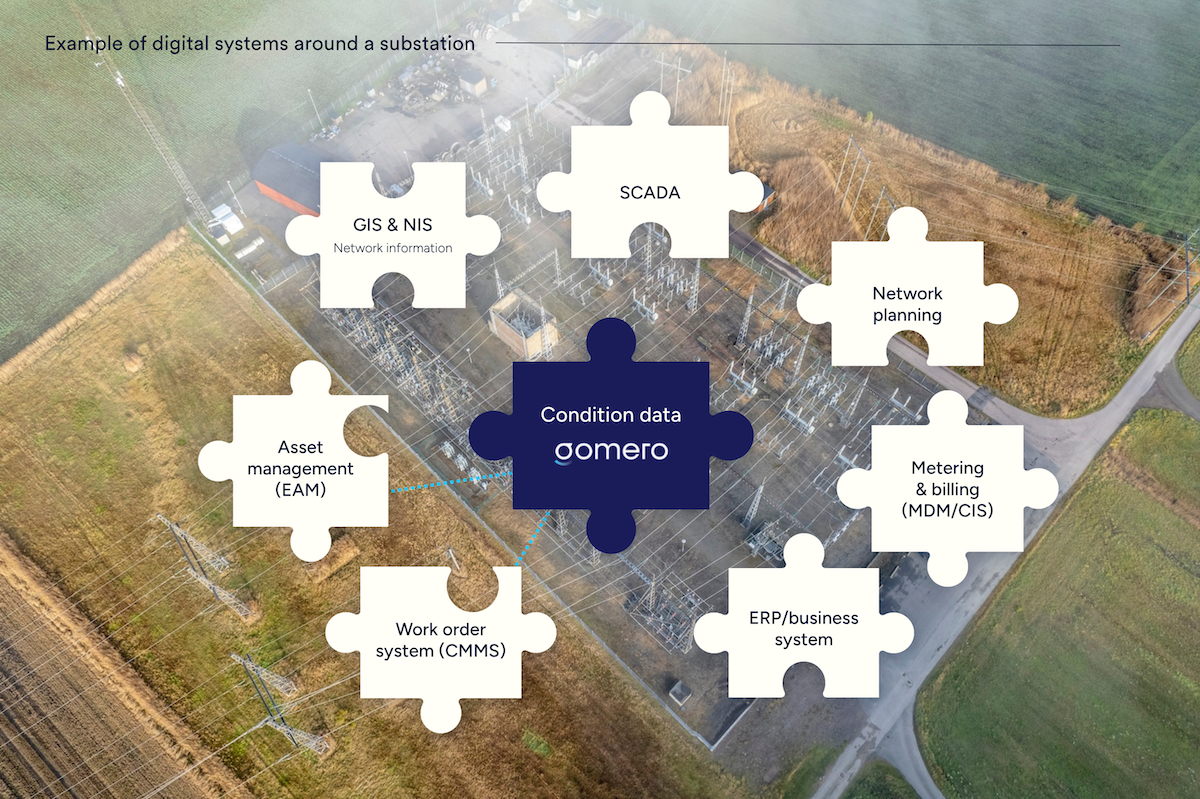
Few electricity network operators start from a blank sheet. Most of those we meet already have a well-developed digital landscape, with systems for everything from operational monitoring and network planning to work orders and billing.
Each system serves a function that someone in the organisation depends on. The problem is rarely that the systems are bad, but that they seldom talk to each other and that none of them is really built to answer the question the maintenance team asks every day: what do we need to do next, and why?
SCADA shows what operations look like right now, and NIS and GIS hold where the assets are located and how the network connects. The asset management system knows what exists and when it was purchased, the work order system what is planned. But what actually decides maintenance priorities, how an asset is doing right now and how it has developed over time, is not really captured in any of them.
It is not surprising that things ended up this way. The systems were built for different purposes, for different reasons and often at different points in the organisation’s history. Each does its job well on its own. Together they leave a gap, because the condition information that ties them together is missing, or scattered across spreadsheets and individual employees.
Operational data and maintenance data are also two different things, and we have written more about why they should be kept apart in our article on the difference.
This is where we see Gomero’s role: an intelligence layer on top of the landscape. The solution is built to work alongside what already exists, not to replace any of it. Data on the condition of assets is collected and analysed in a separate environment, so that deviations and trends become visible and whatever needs attention can become a work order in the system the organisation already works in.
The information can be viewed in Gomero Insights or passed on via API. Which suits you best depends on how your organisation is set up, and that choice is yours.
In practice, a maintenance team no longer has to jump between five tabs to understand the condition of a single substation. Those planning network investments get a solid factual basis instead of guessing from age and the last inspection, and the information about an asset’s health stays even when the person who “used to know” retires.
So it is not about rebuilding the digital landscape, but about complementing it with condition data that ties together what you already have, so that the whole picture becomes visible for the first time.
If you were to draw your own picture of the digital ecosystem around your substations, which systems would be in it, and which of them could actually tell you how a specific station is doing today?
For most organisations we have spoken to, the answer is that none of them can really do it yet. That is the question worth exploring, whichever solution you end up with.